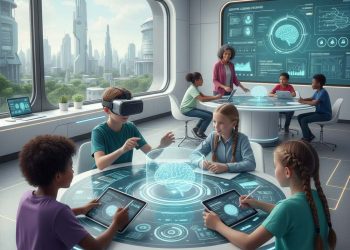



Education is undergoing a period of rapid transformation in response to technological advances, societal needs, and global challenges. In recent years, traditional methods of teaching and learning have been reshaped by innovations such as artificial intelligence (AI), digital learning platforms, micro-credentials, and immersive technologies. At the same time, there is growing emphasis on skill-based education, student well-being, inclusivity, and sustainability. These trends reflect a shift from rote memorization to personalized, flexible, and future-oriented learning approaches.The rise of AI-powered tools, adaptive learning systems, blended classrooms, and industry-academia collaborations highlights the demand for education that not only imparts knowledge but also equips learners with critical thinking, creativity, and employability skills. Moreover, the focus on mental health, social-emotional learning, and ethical use of technology underscores the importance of a holistic approach to education. Together, these trending topics reveal how education is evolving into a more dynamic, accessible, and student-centric system designed to prepare individuals for the challenges of the 21st century.
Key Trending Topics in Education in 2025
| Trend | What it Means / Why It’s Rising | Some Challenges & Considerations |
| Generative AI / AI in Education | AI tools (like generative models) are increasingly being used for content creation, assessment support, tutoring, adaptive learning, and administrative tasks. | Concerns around academic integrity, bias, transparency, and ensuring that AI supplements (not replaces) human teaching. |
| Microlearning + Bite-Sized Learning Modules | Breaking down learning into small, manageable chunks (e.g. short videos, flashcards, interactive micro-units) to cater to shorter attention spans and flexible learning schedules | Requires extra design effort from educators; ensuring coherence across micro-units; alignment with assessments. |
| Hybrid & Blended Learning (Online + Offline) | Blended models are becoming a norm rather than an emergency solution. | Need for robust infrastructure, teacher training, equity issues (access to devices/internet). |
| Alternative Credentials / Stackable Micro-credentials | Instead of—or in addition to—traditional degrees, learners are opting for certificates, short courses, “skill badges” that align more directly with job markets. | Credibility, recognition by employers, standardization, transferability. |
| Data Analytics / Learning Analytics / Predictive Insights | Using data (student performance, engagement metrics) to predict at-risk students, personalize learning paths, and inform decision-making. | Data privacy, ethical use of student data, interpretability of analytics. |
| Teacher Retention, Professional Well-being & Workforce Issues | Many systems face teacher shortages, burnout, and retention challenges. | Ensuring ongoing professional development, better working conditions, recognition, support systems. |
| Trust & Institutional Credibility (especially in higher ed / ed tech) | There’s growing concern about trust in institutions, how they manage tech, student data, and maintain educational quality. | Transparency, governance, alignment between institutional mission and practice. |
| Multimodal / Immersive Learning (VR, AR, mixed media) | Moving beyond text-based tools to include immersive, experiential modes combining visuals, audio, simulation, etc. | Cost, scalability, alignment with curriculum, access to hardware. |
| Ethics in AI & Digital Literacy | As AI becomes integrated, there is a growing focus on teaching the ethical, societal, and critical dimensions of AI (e.g., bias, privacy, algorithmic impact). | How to embed ethics in curricula, balancing technical knowledge with reflective thinking, keeping content up-to-date. |
Key Trends in Indian Education
- Micro-credentials & Skill-Based Education
- There is strong momentum behind micro-credentials: short, focused certifications aimed at building job-relevant skills. A Coursera report found about 95% of Indian higher education leaders believe micro-credentials improve employability.
- Over half (≈52%) of institutions offering micro-credentials now provide them for academic credit, and nearly all almost plan to do so in the next five years.
- This ties into India’s National Education Policy (NEP) and National Credit Framework (NCrF), which aim to make educational paths more flexible and skill-aligned.
- Rise of AI / Artificial Intelligence in Education
- Huge growth in demand for AI-related skills: universities, edtech companies offering AI courses; students enrolling heavily in AI / machine learning / generative AI offerings.
- Teachers are also adopting AI tools: a survey by CENTA found ~70% of teachers are using AI tools in classrooms, though there’s uneven understanding and usage.
- There is projection that India will require a very large number of AI professionals in the coming years—estimates suggest ~1 million by 2026.
- Personalization, Hybrid / Blended Learning, and EdTech Growth
- EdTech startups continue to expand, providing more online courses, live tutoring, adaptive learning platforms, etc. The post-COVID shift to online/hybrid learning remains strong.
- Personalized learning experiences: adaptive content, learning analytics, AI tools are being used to tailor learning to individual strengths/weaknesses.
- Policy Support & Institutional Shifts
- NEP 2020 is pushing many reforms: flexible learning pathways, credit transfers, recognition of skill‐based credentials.
- National initiatives to improve connectivity, tech infrastructure in schools, smart classrooms etc. are helping enable many of these trends.
- Gap Areas / Ethics / Awareness
- Despite the excitement around AI, there are concerns/problems: teacher readiness (many haven’t had full training), digital divide (unequal access to devices/internet), and lack of depth in ethics of AI in curricula.
- Also, implementing micro-credentials in a consistent, credible way (recognition by employers, alignment with academic standards) remains a challenge.
- Students may have more flexible routes: mixing degrees + short certifications + skill courses might become more common.
- Employers increasingly looking for evidence of skills, not just degrees; resumes with micro-credentials, AI-readiness may carry more weight.
- Teacher training and capacity building will be crucial; policy needs to ensure equitable access.
- Regulatory and quality assurance mechanisms will need strengthening: to ensure micro-credentials are meaningful, AI tools are ethically used, and digital content is inclusive.
- Rural and remote areas: often the places where these trends are hardest to implement; efforts to close the digital divide will matter..